Lawmakers estimated that the unbilled portion of water translates to a total potential revenue loss of Sh15.6 billion across water entities.
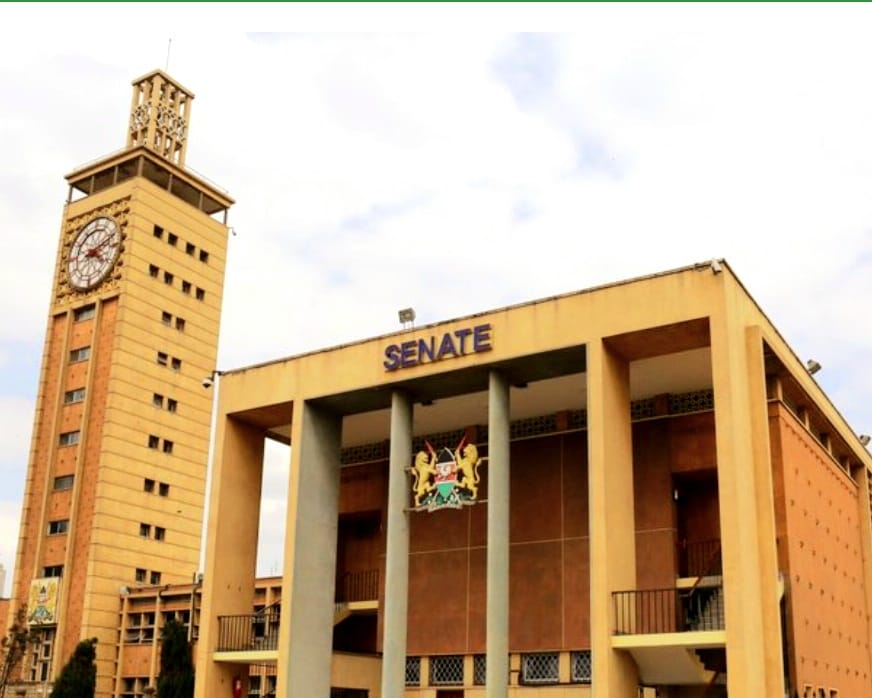
The Senate has given County Governors 90 days to develop and implement measures to mitigate Non-Revenue Water (NRW), addressing both physical and commercial losses.
Non-revenue water (NRW) is water that has been produced and supplied into a distribution system but does not generate income for the water utility.
The lawmakers further directed county chiefs to segregate NRW into physical and commercial losses so that water companies can ascertain and identify specific mitigation measures to effectively address and reduce NRW levels.
Senators issued the directive when they adopted the report of the County Public Investments and Special Funds Committee on the Auditor-General’s reports on the audited accounts of water companies, municipalities, hospitals, and funds for the 2024/25 financial year.
The report was adopted on March 31, 2026, and county governments have until June 30 to act.
Senators agreed with the Committee’s findings and ordered county governments to collaborate with the Ethics and Anti-Corruption Commission (EACC) to ensure pre-emptive measures are put in place to reduce cases of theft and illegal connections.
“EACC should investigate the causes of high NRW, including potential commercial theft, illegal connections, staff collusion, or administrative lapses, and provide a status update to the Senate within 90 days of adoption of this report.”
The directive targets water companies whose NRW exceeds 50 per cent.
In its consideration of the audited reports, the Committee noted that a number of water firms had registered high levels of NRW above the sector benchmark of 25 per cent, as per WASREB guidelines.
The main causes of NRW include illegal connections, the use of flat rates to bill water consumption, leakages from dilapidated infrastructure that has not been replaced due to low funding, and faulty water meters.
A number of water companies did not maintain records of the volume of water produced, as there were no master meters installed at intake points. This made it impossible to establish acceptable NRW levels, despite financial statements reflecting operating revenues from the sale of water.
The Committee estimated that the unbilled portion of water translates to a total potential revenue loss of Sh15.6 billion across the examined entities.
“This massive loss of revenue severely compromises the ability of these companies to maintain infrastructure and discharge their mandates effectively,” the Committee noted in its report to the House.
Senators approved the report on March 31, 2026.
Nolturesh Water and Sanitation Company Ltd in Kajiado County topped the list of companies with the highest NRW above the sector benchmark.
During the 2024/25 financial year, the company produced 3,024,000 cubic metres of water, out of which only 612,352 cubic metres was billed.
Another 2,411,648 cubic metres equivalent to 80 per cent of total production was classified as NRW, translating to a loss of Sh11.9 million.
In second place is Gulf Water Services Company Ltd, whose NRW stood at 71 per cent, translating to a loss of Sh414,000.
The company, a peri-urban water utility operating within Kisumu County, produced a total of 893,795 cubic metres during the year ending June 30, 2025.
However, only 256,111 cubic metres was billed, while 637,684 cubic metres was lost.
Migori County’s Nyanas Water and Sanitation Company Ltd produces 1,149,971 cubic metres of water, of which 740,492 cubic metres (64 per cent) is lost.
Bomet Water and Sanitation Company Ltd produced 1,296,892 cubic metres, out of which 819,277 cubic metres was lost, accounting for 63 per cent of total production.
Tana Water and Sanitation Company Ltd in Tana River County produces 700,933 cubic metres, of which 428,230 cubic metres was lost, while only 272,703 cubic metres was billed.
Nairobi City Water and Sewerage Company Limited produces a total of 215,292,106 cubic metres of water, out of which only 108,383,164 cubic metres is billed. The difference of 106,908,942 cubic metres is lost and classified as NRW.
Kakamega Rural Water and Sanitation Company Ltd used an unapproved tariff structure. The company billed customers using a tariff meant for Busia Water and Sanitation Company Ltd, contrary to Regulation 45(1) of the Water Act Regulations, 2016, which requires that a licensed water service provider implement the tariff approved and gazetted by the Regulatory Board for the prescribed period.
Eldoret Water and Sanitation Company Limited had 19,862 active meters that were not billed. This gap may indicate weaknesses in the billing system, meter reading processes, or customer account management, suggesting potential inefficiencies or control lapses.
“Over time, prolonged non-billing can lead to accumulated arrears, making recovery more difficult and potentially straining customer relations,” observed the Committee, noting that reducing NRW would have a significant positive impact on the financial health of water companies.
“For those currently operating with negative working capital and incurring losses, minimising NRW would increase cash flows, enhance liquidity, and improve operational sustainability.”
Senators said that by converting lost water into billable revenue, companies could reduce losses, move towards profitability, and better meet their financial obligations. Additionally, lowering NRW would bring these entities closer to the sector benchmark of 25 per cent, demonstrating greater efficiency, sound governance, and improved service delivery.
The Committee’s investigation revealed that 26 water companies irregularly spent customer deposit funds to finance operational expenses without the approval of their Boards of Directors.
“Using customer deposits for operations is a major risk, as it hinders the ability of companies to issue refunds upon request. Deposit money is refundable on demand for customers terminating their service contracts without outstanding bills,” the Committee noted.
The total unauthorised amounts reported across the 26 water companies for the 2024/25 financial year amounted to Sh1.7 billion, highlighting significant concerns regarding the management of customer deposits and other funds.
Nairobi City Water and Sewerage Company Limited reported substantial unauthorised use of customer deposits amounting to Sh1.31 billion, indicating persistent or systemic challenges in safeguarding deposits and revenue collection.
Eldoret Water and Sanitation Company Limited installed 1,322 new meter connections; however, no deposits were collected for these connections.
The Committee observed that the company is exposed to significant revenue risk, as the installation of new meter connections without collecting customer deposits leaves it without financial safeguards against non-payment.