Nyandarua Governor Badilisha Kiarie has faced tough questioning from senators during a County Public Investment Committee (CPIC) appearance, revealing the delayed municipal autonomy and weak financial oversight propelling the county’s three municipalities to spend only Sh14.1 million out of an approved Sh71.1 million recurrent budget, with minimal use of a Sh22.2 million development allocation.
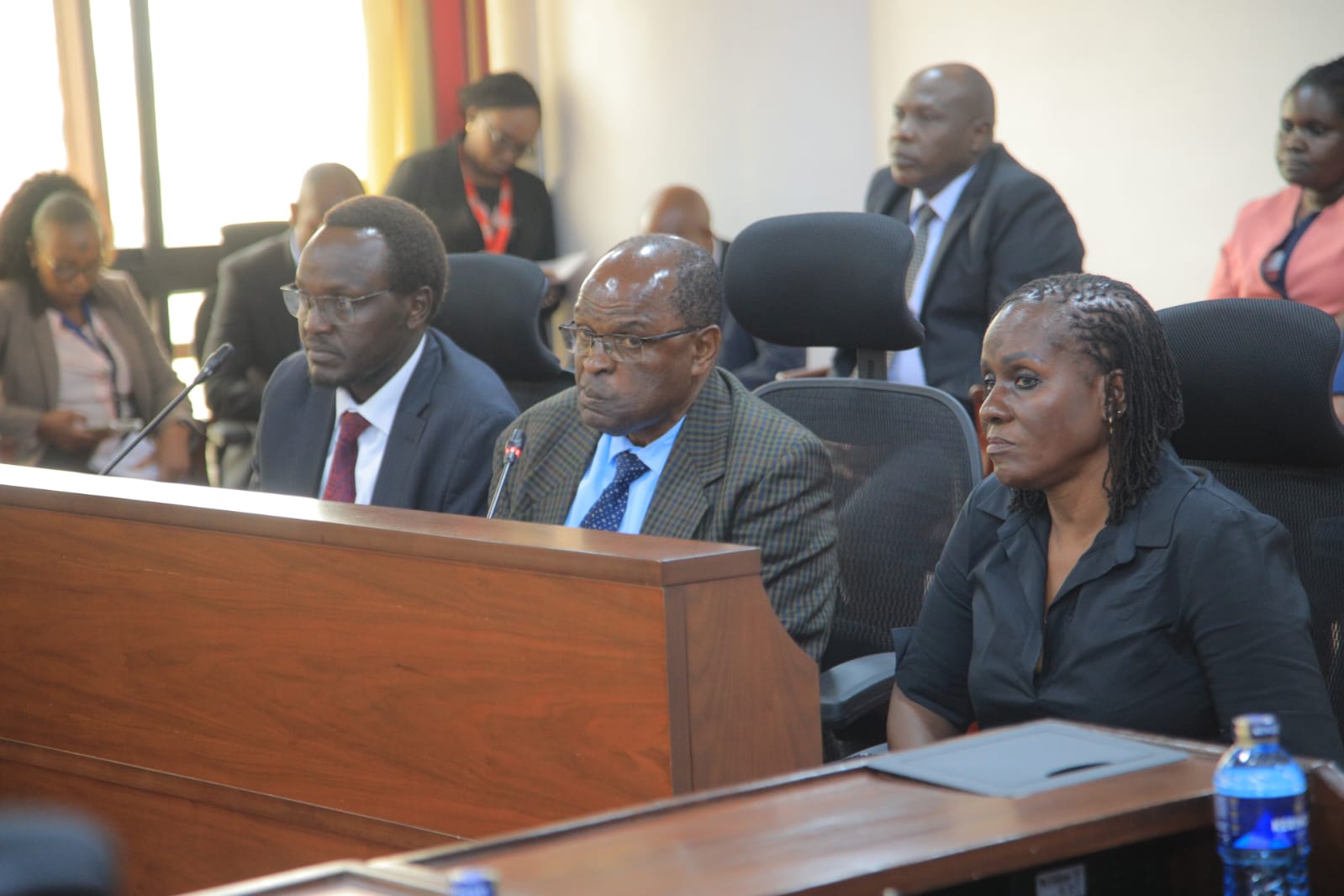
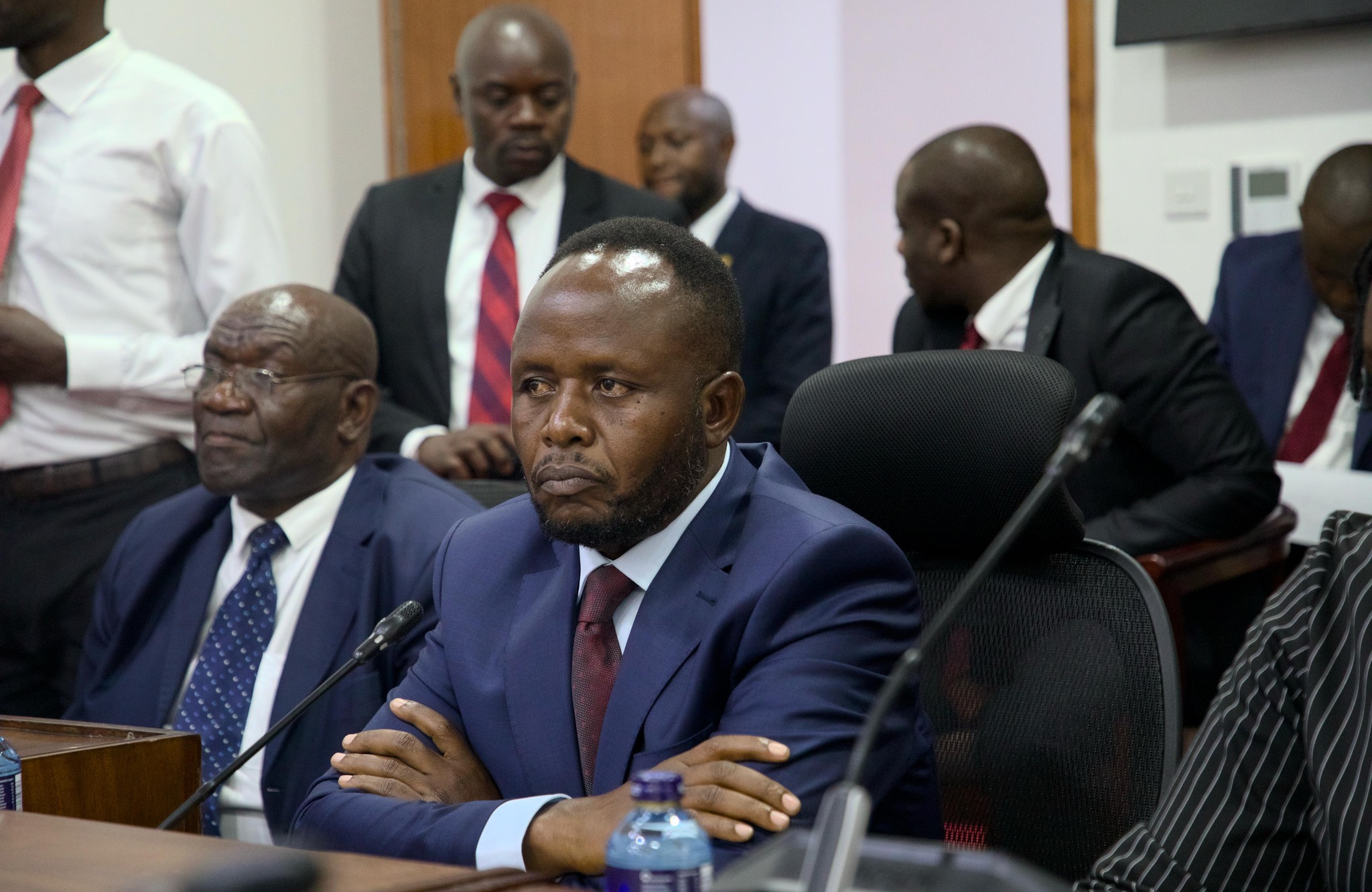
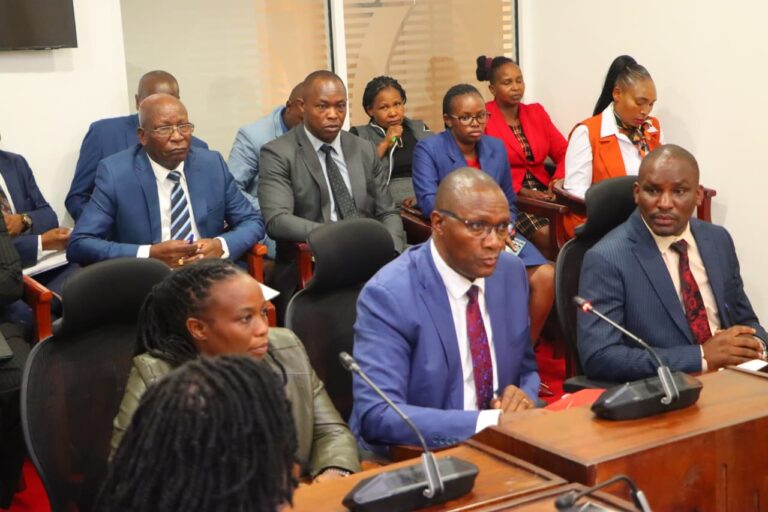
Nyandarua County governor, Badilisha Kiarie, appeared before the Senator Godfrey Osotsi-led Senate County Public Investment Committee (CPIC) to present the auditor general’s reports for the financial year 2024-2025 on the use of funds by Nyandarua Water and Sanitation Company, Olkalou Water and Sanitation Company, and the county municipalities.
Kiarie explained to senators the progress of the Engineer Municipality, Mairo-Inya Municipality, and Ol Kalou Municipality. He told the Senate that progress is ongoing and that the municipalities have their own special accounts.
“The process of granting the autonomy of the three municipalities, Engineer Municipality, Mairo-Inya Municipality, and Ol Kalou Municipality, is now complete, and all three managers have been appointed as the accounting officers and opened the special purposes accounts for the municipalities, and even a gazette notice transferring the functions to the municipalities,” Badilisha said.
During the interrogations, it was revealed that county governments still struggle with municipal autonomy because of what senators attribute to weak legal frameworks that blur roles between counties and municipalities, even though the law grants the County Executive Committees (CECs) authority to organise and manage county structures.
Senator William Kisang questioned the county’s revenue collection, prompting the governor to explain that the transfer process is being implemented gradually and that progress is being made.
However, committee chairperson Godfrey Osotsi expressed concern over how the matter had been flagged by auditors as an audit query.
“The municipality as an entity needs to operate independently, but when we did an audit, we found that quite some functions are performed by the county executive even though they had already been gazetted,” reads an auditor general’s report.
Senator Peris Tobiko and Senator Kavindu Muthama raised concerns over how the county is running municipalities, warning that further costs will be incurred if the situation is not addressed.
”We are realising that governors are having challenges releasing the operations and functions of municipalities for obvious reasons. It’s basically where they get their own source of revenue, and as a committee, we mentioned having a sitting with governors so that we agree on how to make municipalities functional without also stripping off counties’ own source of revenue. If we don’t sort this out, we will go in circles every other time.’’ Tobiko warned.
Governor Kiarie, who chairs the Trade Committee at the Council of Governors, objected to the position, arguing that while municipalities meet the criteria for independence, in most counties, the main town, often the only municipality, is the primary source of own-source revenue (OSR) for the entire county.
“Most of these municipalities qualify; there could be a bit of non-compliance, which sometimes is inevitable. Sometimes you find a whole county has one major town which carries the municipality, and it’s the one that gives the OSR for the whole county.’’
He added, “As much as it’s written there that they can collect revenue, that revenue being collected is also required by other satellite towns very far away from the municipality. Such an aspect is that once it is collected, we give a budget, and we share the resources. The compliance will come gradually.”
The committee chairperson, Godfrey Osotsi, warned while affirming that the committee will give guidelines when they finish interrogating the audit reports and tabling before the house.
“Governors, either you strictly comply with the urban areas and cities act, or you seek amendment through COG so that you can comply, because the law, as it is, considers municipalities to be independent. They have autonomy even from the county government. So long as there is a tiny line between a county and municipality, the Auditor General will continue to raise that one as an audit query,” he said.
“Governors under COG, you need to propose an amendment to that act. This is the third time we are speaking about the same thing. The same way you devolved from the national government to county governments is the same way it applies from counties to municipalities. “Osotsi said.
The Vihiga Senator added that they will issue a directive to counties to fully comply with existing law, which provides that the municipalities must have financial, managerial, staffing, and organisational autonomy.”
The senators uncovered significant weaknesses in customer billing systems and asset management at Nyandarua Water and Sanitation Company Limited, raising concerns over revenue leakage and the integrity of the company’s financial records.
Office of the Auditor General findings before the senators revealed that at least 3,606 active customer accounts in the company’s billing system were found to be operating without assigned meter numbers, despite records indicating that the customers had been allocated meters.
“Analysis of the customer account data from the company’s billing system revealed that 3,606 active customer accounts did not have assigned meter numbers even though the meter status showed that the customers were allocated meters,” the Auditor General told senators.
The audit further revealed that 179 customers with functional meters and recorded water consumption were billed using estimates and flat rates instead of actual usage.
”Further review of billing reports revealed that 179 customers with meter numbers and recorded consumption were charged on estimates and flat rates, with total billings amounting to Sh 167,765,” OAG affirmed.
Kiarie, in response, acknowledged the gaps, stating that the company initially relied on special account numbers to identify customers but has since transitioned to meter-based identification.
”Nyandarua Water initially identified customers using a special account number, but has since started identifying customers using meter numbers. Out of 3,606, we have updated 600 accounts,” Kiarie told senators.
On the other hand, the audit also raised red flags over land ownership and asset disclosure, noting that while the company’s financial statements list Sh1,000,000 as the value of land under property, plant, and equipment, records show the company owns 11 parcels of land.
”The financial statements reflect Sh11,744,498 in respect to property, plant and equipment, which includes Sh1,000,000 as the value of land. However, records available revealed that the company had 11 parcels of land, but only one was included in the assets register and disclosed in the financial statements,” said the auditor’s report.
”Only one title deed was provided for audit review, and management did not provide for verification of title deeds in respect to 10 parcels of land owned by the company. In the circumstances, the ownership and value of the land owned could not be confirmed.”
However, Badilisha stated that the Board and executive team had established an ad hoc committee to supervise the confirmation and verification of asset ownership, with the responsibility of examining takeover and handover reports about the properties.
”The Board and Management have constituted an ad hoc committee to facilitate the negotiation, review, and completion of the handover and takeover reports, including verification and confirmation of asset ownership. The process is already at an advanced stage and is expected to be fully completed before the end of the current financial year,” Kiarie said.
The Senate County Public Accounts Committee (CPAC) is currently operating within a critical three-month window from January to March 2026 to examine and debate the Auditor General’s (AG) reports before the house, where either the house will approve or reject the tabled report.