
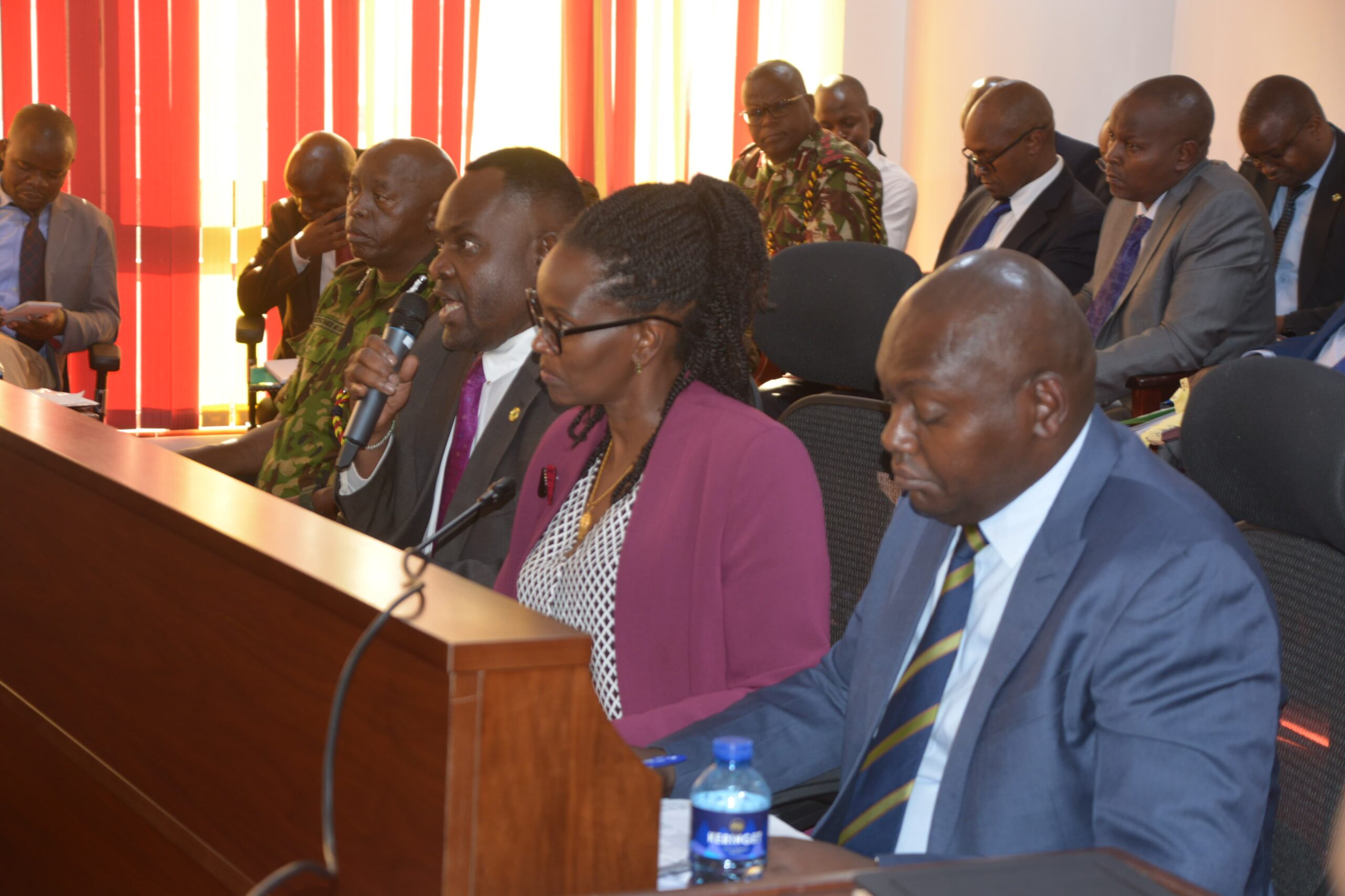
The National Assembly Public Accounts Committee (PAC) has faulted the National Police Service (NPS) and its contracted insurer, Britam Insurance over delays in settling group life insurance claims owed to families of officers who died in the line of duty.
The Tindi Mwale (Butere MP)-led PAC raised concern after the Auditor-General’s report for the financial year ended June 2023 flagged unpaid group life benefits amounting to an excess of Sh220 million,, contrary to contract timelines that require claims to be paid within days after full documentation is submitted.
Appearing before the committee on Thursday at Parliament Buildings, the NPS team led by Ms Bernice Sialaal Lemedeket acknowledged the audit queries but told lawmakers that progress had since been made in settling the claims following sustained pressure from Parliament.
“It is true that the time of audit (November 2023), Britam had not yet paid Ksh 220 in respect to group Life Sum Assured. Out of these nine-six (96) cases amounting to sh205 million have been fully settled, three (3) cases amounting to sh6 million are in the processing stage,” Ms. Lemedeket told the MPs.She added,“Two (2) cases amounting to Sh. 3.4 million were settled by KRA since the officers were on secondment at the time of death,”However, MPs said the figures did not address the deeper problem of delays which, according to the committee, had caused unnecessary suffering to bereaved families.
Aldai MP, Maryanne Kitany questioned why settlement was taking years, yet premiums are expected to be paid promptly once contracts are awarded.“Families have been devastated. The loss alone is devastating, more so when the police officer died in the line of duty. Yet settlement is taking too long, while premiums were paid,” she said, calling for clarity on what the contract provides and how families are compensated for late payments.
Mathioya MP, Edwin Mugo was particularly critical of the explanation that some cases were still “under processing”, citing examples where the date of loss was in 2023 but payments were being made as late as 2025.“What do you mean by processing? Three years is far too long. This money can help the family educate children and deal with other needs,” he told the NPS team.
Committee members demanded to know whether the insurer was complying with the service level agreement (SLA), and why claims were not being settled within the timelines provided for in the contract. Teso South MP, Mary Emase said while it was commendable that most of the flagged amount had been paid, the Auditor-General’s figure could represent only a fraction of what officers’ families were still owed.She warned that there could be additional pending claims running into hundreds of millions of shillings beyond what the audit captured.“My worry is how we can get it right on time. Assuming your dad was a police officer, died in line of duty, then you start being taken in circles for three or five years, that’s when you are paid,” she said.
In response, the NPS team said delays were sometimes caused by funding constraints, citing exchequer challenges that affect timely payment of insurance premiums.Ms Lemedeket told the committee that the police service requires stronger budgetary support to ensure insurance obligations are paid on time, arguing that when premiums delay, insurers are unable to release claims promptly.
She also said the NPS was reviewing internal processes to improve efficiency and ensure officers or families submit documentation promptly, noting that some claimants do not respond when required to finalise processing. But the explanation did not sit well with lawmakers with Funyula MP Wilberforce Oundo launching a stinging rebuke that “The Executive has failed the officers who protect us”According to Oundo, the situation reflected failure by government to protect officers who risk their lives daily to secure the country.
“The Executive has failed the police officers who go out every day to save our lives,” Oundo remarked during the exchanges, as the committee demanded accountability on why the state could not prioritise premiums for officers exposed to risk daily. Britam Manager Benard Murage, who appeared alongside NPS officials, acknowledged that premium payments were central to efficient operations, describing insurance as a “cash-and-carry” business model where claims are easier to settle when premiums are up to date.
However, MPs insisted that delays had also been worsened by what they described as an insurance industry culture of dragging claims, even for ordinary citizens. Mwale argued that insurers often withhold payments even in private policies such as comprehensive motor vehicle insurance, leaving clients frustrated and financially strained. “That habit is also an insurance company’s culture of delaying, holding claims and trading with the money,” he said, adding that without parliamentary summons, many claims would likely remain unpaid.
The committee further urged NPS and Britam to adopt innovations to help officers submit and track claims faster, including mobile-based systems, digital uploads and user-friendly platforms. Murage said Britam had already invested in digital processing, including a system supported by liaison officers across services and an app that allows officers to check benefits. Still, committee members maintained that the improvements must translate into real-time compensation for families affected by tragedy, not prolonged waiting periods.