The Senate Education Committee has raised concerns about a Ministry of Education directive that proposes merging early childhood teacher training with primary teacher education, after county governments and education stakeholders warned that the move could disrupt early childhood development education (ECDE) and undermine devolution.
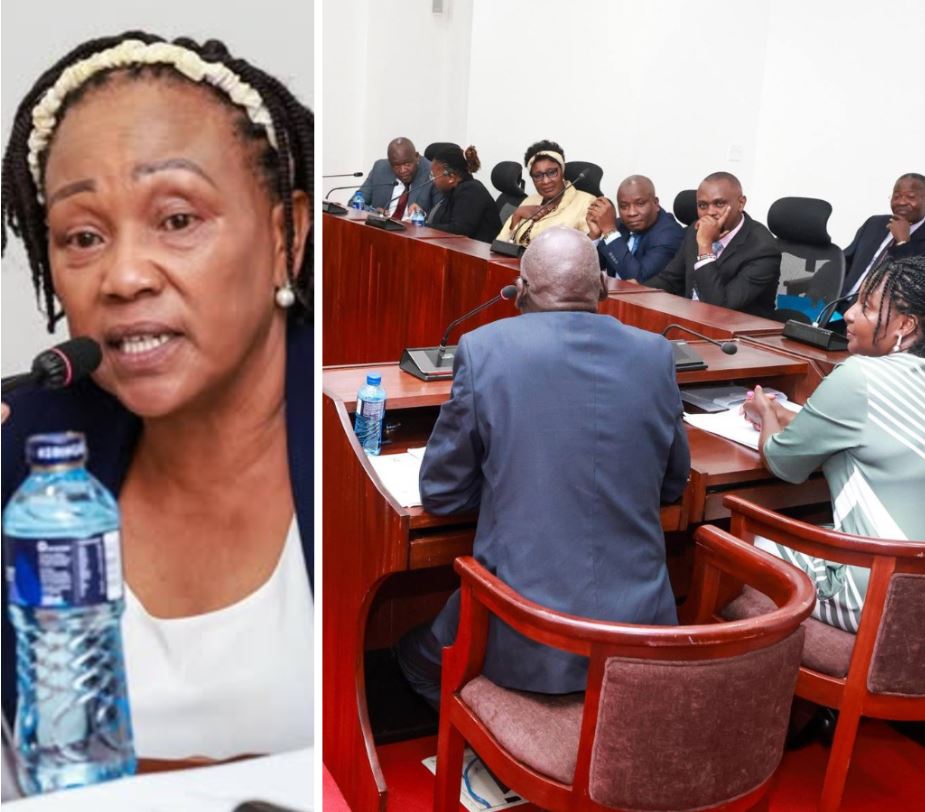
Senator Betty Montet-led Education Committee engaged the education professionals and the Council of Governors to interrogate the implications of a circular issued by the Principal Secretary for Basic Education.
Montet said the issue goes beyond administration and touches on constitutional safeguards, noting that ECDE is a devolved function and any policy change affecting counties must be subjected to public participation and stakeholder consultation.
Sen. Montent, “This is a fundamental issue which affects many Kenyans and matters to our children.”
Catherine Mumma (nominated) said the matter raises constitutional issues and should not be handled as a routine administrative change. “This is political. What CS has done is political. We must deal with it keenly, and that circular is illegal, and we must write to the CS to retract the circular with immediate effect,” Mumma said.
Machakos Senator Kavindu Muthama said the directive was introduced abruptly, creating uncertainty for students already enrolled in ECDE programmes and institutions that had admitted trainees under existing guidelines.
Kajiado senator Seki Lenku cautioned that Early Childhood Education is a specialised field requiring distinct training approaches, referring to earlier heated conversations of the MPs firing the CS education and PS education.
“Whoever said that this ministry we have has clueless PS and leaders was right, it’s true. We need to have him here and tell this committee why he is writing those circulars without engaging stakeholders,” Seki said.
Seki firmly warned that merging ECDE with primary education could dilute professional standards and weaken the foundation of the Competency-Based Curriculum.
Laikipia Senator John Kinyua expressed his dissatisfaction with the circular, “I’m not getting the whole scenario. Why are you making these Kenyans, who are the base foundation of children, be frustrated and humiliated?” Kinyua questioned.
The former UDA brigade and parliamentary commissioner urged that the committee closely examine the impact of the directive on counties, particularly on workforce planning and service delivery, noting that decisions affecting devolved functions must be informed by data and expert advice.
The Council of Governors was represented by the Kericho Governor Eric Kipkoech Mutai, who is also the Chairperson of the CoG Education Committee, who advised for the withdrawal of the circular.
“Remember, we just came from when we brought in CBC, the country was not ready to receive it, and that is why we hold the view that the ministry withdraw the circular and allow the status quo to continue until such a time when whole stakeholder participation has been done,” Mutai advised.
Mutai affirmed to the senators that counties were not consulted before the directive was issued, despite ECDE being a county function, warning that the move could strain county budgets and reverse gains made in early learning.
According to university and teacher training institution education stakeholders, early childhood education is research-driven, play-based, and care-oriented, necessitating specialised training.
They called for declining and opposing while cautioning that the proposed merger threatens clear academic and professional pathways from certificate to doctoral level.
Catherine Murungi from Kenyatta University said, “We are against the merger that a teacher should teach in three levels, PP1 to PP2, then move to grades 1 to 3, then move that from grades 4 to 6. Methodologically and philosophically, it is not correct, and there cannot be a teacher who will be able to teach those three grades progressively.”
The Senate Education Committee said it will compile views from the engagement and engage the Ministry of Education, with several members indicating that the circular may need to be withdrawn or suspended until comprehensive consultations are conducted.
Hudson Ouko, a senior lecturer for Kenyatta University, who is a specialist in early childhood studies, on his part said, “We did a teacher curriculum framework, which was approved, which had the three diplomas separate. We met and agreed, but now that the ministry has decided to revise or eliminate one of the three options, do we have an approved curriculum? We must ask the minister.”
Another stakeholder raised concerns, also saying, “For me, I’m just wondering because we are in one country, and let me say that if you are teaching in the kindergarten and earlier years, you must have a diploma in early childhood. Why do we seem to be working together in the same country we are in?”
Gov. Mutai “Remember, we just came from when we brought in CBC, the country was not ready to receive it, and that is why we hold the view that the ministry should withdraw the circular and allow the status quo to continue until such a time when whole stakeholder participation has been done.”
He added, “A couple of years ago, TSC issued a circular indicating that all these teachers who never made a C+ in the training subject were not supposed to be employed by TSC. “All those teachers who never attained the grade in the training subject were almost committing suicide because they were cut off. This was done retrogressively without preparing universities not to continue admitting those students.” He added, “We want to avoid such kinds of decisions because they’re full of frustrations and withdrawal first, and let’s discuss further.”