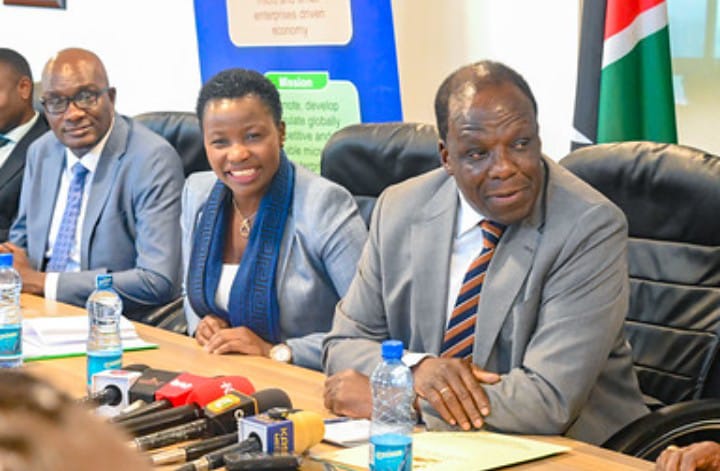
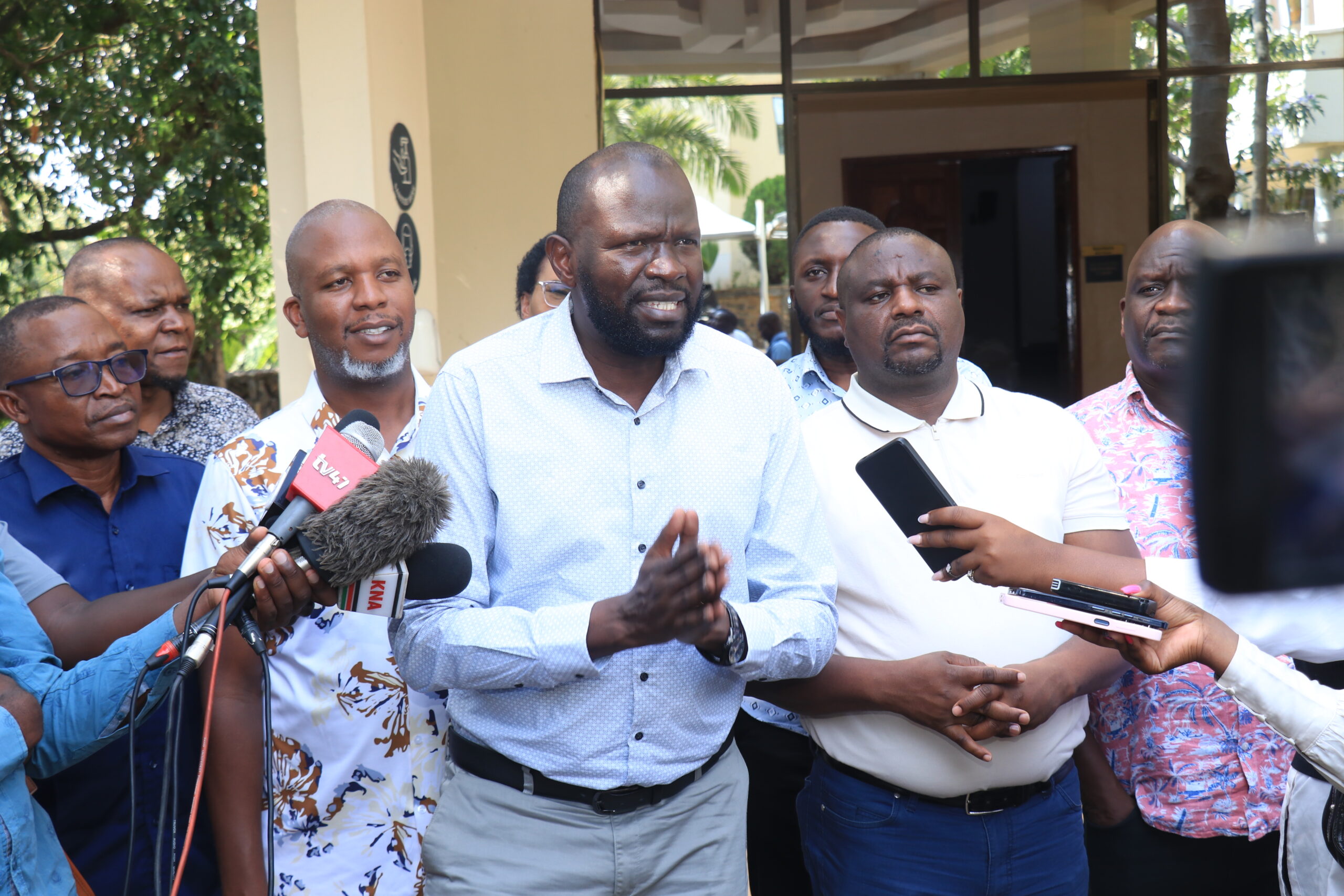
Millions of shillings paid by public secondary schools to the Kenya Secondary School Heads Association (KESSHA) have come under parliamentary scrutiny, with MPs questioning why taxpayer-funded institutions are sending money to a private members’ organisation whose finances are not subject to the same public accountability rules.
The National Assembly Committee on Governance and Education raised the concern after reviewing Auditor-General reports showing substantial payments to KESSHA by national schools over five financial years.
Committee chairman Dickson Maungu said one school had paid about Sh6 million to KESSHA, while another had remitted nearly Sh5 million. He warned that similar payments across the country could amount to billions of shillings.
“If you convert them into all the schools in the country, there are billions going to KESSHA, and we want to find out whether KESSHA is a recipient of public money,” Maungu said.
The committee wants to establish the legal basis for the payments and whether KESSHA, as the recipient of money raised through public institutions, can be held accountable for its use.
“KESSHA is a private members’ organisation. The activities they are doing may be good and necessary, but the contributions are public funds. If it is public money, it must be accounted for,” Maungu said.
The MPs are examining Auditor-General reports for the 2020/21 to 2024/25 financial years covering several national schools in Nyanza and Western regions.
Principals and senior managers from Ng’iya Girls High School, Maseno School, Bunyore Girls High School, Chavakali Boys High School, Maranda High School and Kisumu Girls High School appeared before the committee at the Royal Swiss Hotel in Kisumu on Thursday.
Payments to KESSHA were among the issues raised in the audit reports.
Maseno School principal Peter Owino Otieno told MPs that the school made the payments in good faith and to support students taking part in co-curricular and extracurricular activities.
He said schools were expected to pay annual subscriptions to KESSHA because failure to do so could prevent their students from taking part in regional and national sports, drama and music competitions.
“Management fully accepts the auditor’s observation regarding the transfers made to KESSHA. These transfers were made in good faith strictly to facilitate students’ co-curricular and extracurricular activities,” Owino said.
He added: “Without paying them, the institution’s students are completely locked out and disallowed from participating in sports, drama, music or other regional and national talent competitions.”
However, the explanation did not resolve the committee’s main concern over whether public schools have the legal authority to transfer public funds to a private association.
Owino acknowledged that the payment system needed to be addressed through policy.
“The permanent regularisation of this payment channel requires policy intervention from higher authorities,” he said.
He argued that KESSHA programmes benefit not only school heads but also students and schools.
The committee, however, said the usefulness of the programmes could not remove the need for proper controls over public money.
Lungalunga MP Chiforomodo Mangale said MPs first needed to establish KESSHA’s legal status and its relationship with public schools and the government.
“We must start from the point of understanding how these funds are transferred to KESSHA. KESSHA is an organisation for teachers who head schools, and there was no clear indication that it is a government entity,” Mangale said.
Kiminini MP Maurice Kakai Bisau described KESSHA as a private organisation whose members are school heads and questioned why public funds should be sent to it without clear controls.
“KESSHA remains a private club, a private organisation managed by principals in the teaching fraternity. In the absence of it being formalised, we still look at it as a private members’ organisation,” Bisau said.
He said Parliament needed to establish who controls the organisation and the legal basis for receiving money from public schools.
“This is something we need to interrogate because we cannot continue seeing funds being sent to an organisation without proper control and accountability,” he said.
Maungu said KESSHA officials would be called upon to explain how the association operates and account for the money received from public schools.
“We want to know why a private members’ club should enjoy public money yet its operations cannot be publicly scrutinised like those of a public institution,” he said.
The committee chairman said the inquiry had been made possible by Parliament’s increased focus on Auditor-General reports following the splitting of the former Public Investments Committee into three specialised committees.
“We are proud as a Parliament that we have been able to look at the Auditor-General’s reports to the present. Right now, we are looking at 2025/26, meaning we are now current,” Maungu said.
The committee is also examining broader financial management problems in public schools, including the transition from previous school audit systems to the requirements of the current public financial management framework.
Maungu said some schools had struggled to adopt Public Sector Accounting Standards (IPSAS), raising concerns over financial controls in institutions handling public money.
“The shift from the school audit system, where they used to operate using different systems, to the new systems has been a challenge,” he said.
He said school managers and bursars needed training and support to meet the new financial requirements.
“Some of these schools are not shifting to Public Sector Accounting Standards. We need to know why, and they need to be empowered so that they can be able to do the right thing,” Maungu said.
Despite the concerns raised by auditors, Maungu said the committee was impressed by the general performance of the schools and their management.
“By and large, what we have seen is impressive,” he said.
Bunyore Girls High School Chief Principal Judith Agade told the committee that some expenditure questioned by auditors had supported student activities as well as training for deputy principals, bursars and teachers through workshops.
She said the spending was aimed at improving staff capacity while supporting learners.