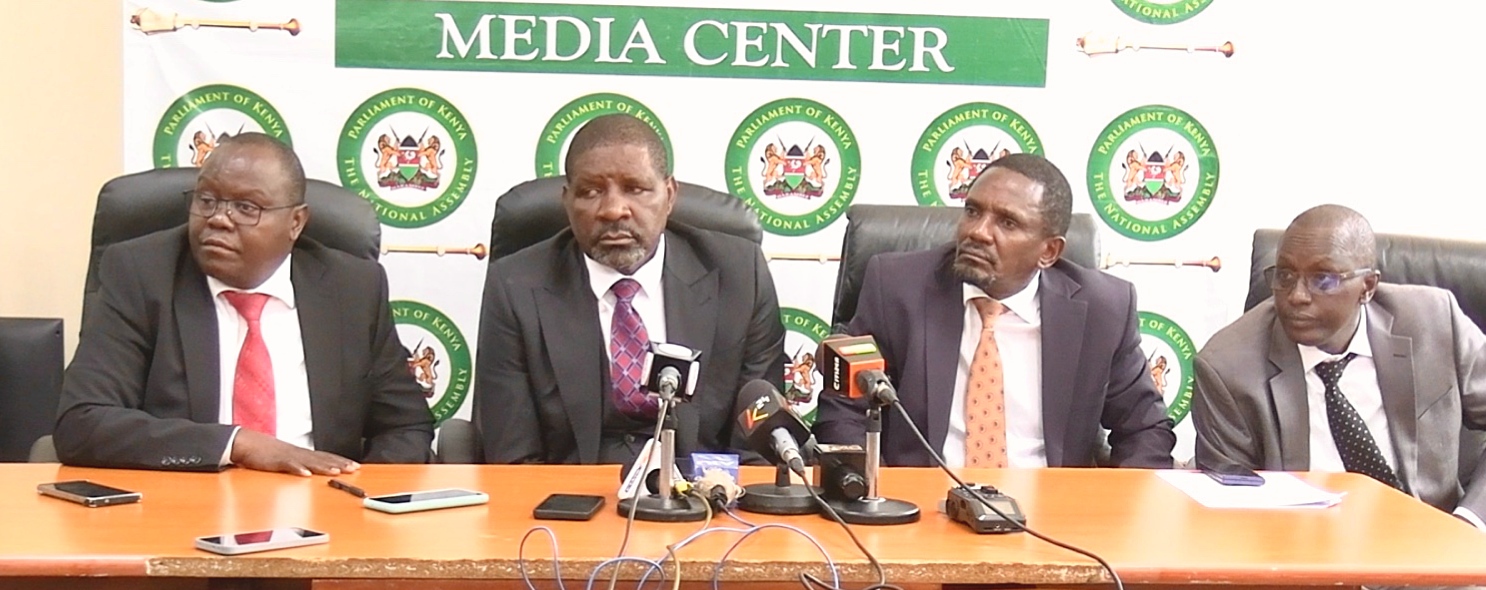
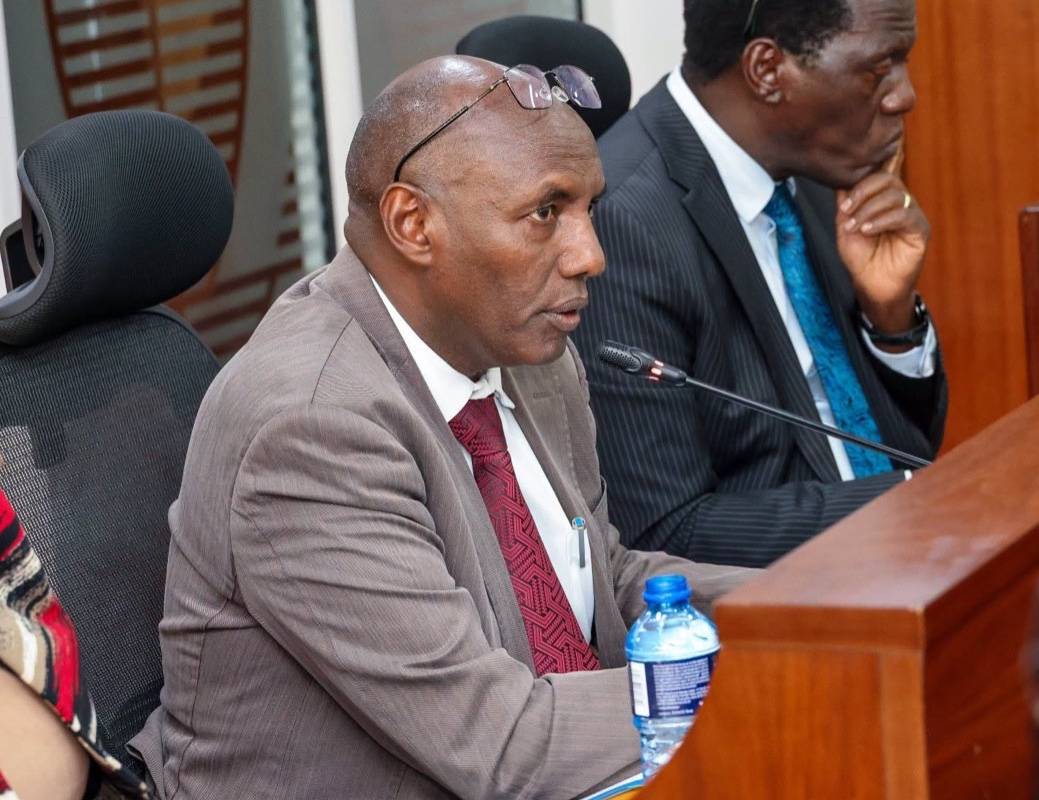
The Principal Secretary for Petroleum, Harsama Kello, on Thursday defended the State Department’s management of the petroleum sector before the National Assembly Public Accounts Committee as MPs scrutinised audit queries on more than Sh.304 billion in recoverable oil exploration costs, delays in approving key upstream projects, the Government-to-Government (G-to-G) fuel import framework and the stalled Mwananchi Gas Project.
Appearing before the committee chaired by Butere MP Tindi Mwale, Kello responded to concerns raised by the Auditor-General for the financial year ended June 30, 2025, maintaining that many of the issues had either been resolved or were already being addressed following reforms in the petroleum sector.
A major concern was the Auditor-General’s finding that four active Production Sharing Contracts (PSCs) had accumulated recoverable exploration costs amounting to USD 2.35 billion, equivalent to Sh.304.37 billion, without evidence that mandatory cost recovery audits had been conducted.
The Auditor-General warned that failure to undertake the audits could expose the Government to recovery of ineligible petroleum exploration expenses.
Kello told MPs that the responsibility for conducting the audits had shifted from the State Department to the Energy and Petroleum Regulatory Authority (EPRA) under the Energy Act.
“Pursuant to sections 10 (k) and 10(l) of the Energy Act, Cap 314, the statutory mandate to verify the recoverable cost of oil and gas due to the parties to a petroleum agreement as well as to audit contractors for cost recovery vests with the Energy and Petroleum Regulatory Authority (EPRA). Prior to the enactment of the Energy Act Cap 314, this function was undertaken by the State Department for Petroleum. At the time of the transition of this mandate to EPRA, the State Department had conducted cost recovery audits for Blocks 10BB and 13T, covering the period from 2010 to 2020.”
The committee also questioned delays in approving the Field Development Plan for the Lokichar oil project after the proposal was submitted in October 2021, exceeding the 60-day approval timeline required under the Production Sharing Contracts.
Kello acknowledged the delay but said the matter had since been resolved.
“It is true that during the time of audit, the Field Development Plan had not been approved, however the plan has now been approved and the contractor has started the development phase of the project.”
MPs also examined the Government-to-Government petroleum importation arrangement, with the Auditor-General raising concerns over contract extensions, importer nominations, import premiums, escrow accounts, legal fees and demurrage charges.
Defending the framework, Kello said the Government had adjusted the arrangement to ensure uninterrupted fuel supply while cushioning the economy from foreign exchange pressures.
“In the month of September 2023, the Government renegotiated the Freight and Premiums thus amended the MFA via a Variation Agreement. The Variation Agreement to the Master Framework Agreement signed between the Government of Kenya and the Suppliers allows operational flexibility in the delivery of Petroleum Products.”
He added that Uganda’s decision to import fuel through its National Oil Company reduced cargo volumes under the arrangement, making it necessary to extend the contracts.
“Due to changing market dynamics… in December 2024, the Cabinet approved extension of the G-to-G arrangement for a period of two (2) years after the expiry of the current Contract.”
On concerns over escrow accounts, Kello maintained they were properly managed and did not constitute public funds.
“The management of the Escrow Account is governed by the Operational Agreement… It is important to note that every transaction in the G-to-G is off the Government balance sheet.”
The committee further questioned the absence of an approved National Petroleum Policy during the audit period. Kello acknowledged the gap but said the policy had since been approved and was guiding operations.
“It is acknowledged that at the time of Audit, The State Department did not have an approved National Petroleum Policy… However, the Policy has since been finalized and approved and is currently being implemented.”
Lawmakers also sought answers over the long-delayed Mwananchi Gas Project, which the Auditor-General said had consumed more than Sh.1.28 billion but remained largely unimplemented after safety concerns emerged over defective LPG cylinders.
The audit found that more than 79,000 cylinders inspected were defective, while over 26,000 cylinders valued at Sh.55.3 million had not been replaced by the time of the audit. It also questioned whether taxpayers had received value for money due to the lack of an implementation plan and sustainability framework.
Kello attributed the delays to court proceedings and subsequent policy changes.
“In October 2018, the project was stopped by a court order following a legal suit by COFEK owing to the doubts on the quality of the cylinders supplied.”
He said the Ministry later replaced thousands of defective cylinders before shifting to a broader clean cooking strategy.
“From December 2021, the Ministry undertook measures to remedy the defective cylinders. 52,864 cylinders has since been remedied, delivered, inspected and accepted by the Ministry through National Oil Corporation of Kenya (NOCK).”
Kello added that the Government adopted a new national LPG penetration strategy in October 2023 targeting low-income households, delaying the original Mwananchi Gas Project.
“This new policy directive essentially delayed the intended distribution of LPG cylinders under Mwananchi gas project as the ministry initiated spirited efforts to employ a more sustainable strategy that will reach all low-income households in the country.”
He told the committee that the project’s assets were transferred to the National Oil Corporation of Kenya in November 2024 to support future implementation.
The Public Accounts Committee is reviewing the Auditor-General’s findings before making recommendations to the National Assembly on the management of public resources within the State Department for Petroleum.