Kenya is intensifying efforts to advance industrial growth, deepen value addition and expand market opportunities for locally made products through the 9th Edition of the Changamka Shopping Festival.
Organized by the Kenya Association of Manufacturers (KAM), the Festival will be held alongside the Kenya Industrialization Summit in November, hosted in partnership with the Ministry of Investments, Trade and Industry to celebrate local industry.
The Changamka Shopping Festival will take place from 3rd November to 7th November 2026 at the Kenyatta International Convention Centre (KICC), Nairobi, with the Kenya Industrialization Summit scheduled for 4th November to 5th November at the same venue.
The two platforms will bring together manufacturers, consumers, investors, policymakers and other industry players to showcase local products and explore opportunities to strengthen Kenya’s industrial sector.
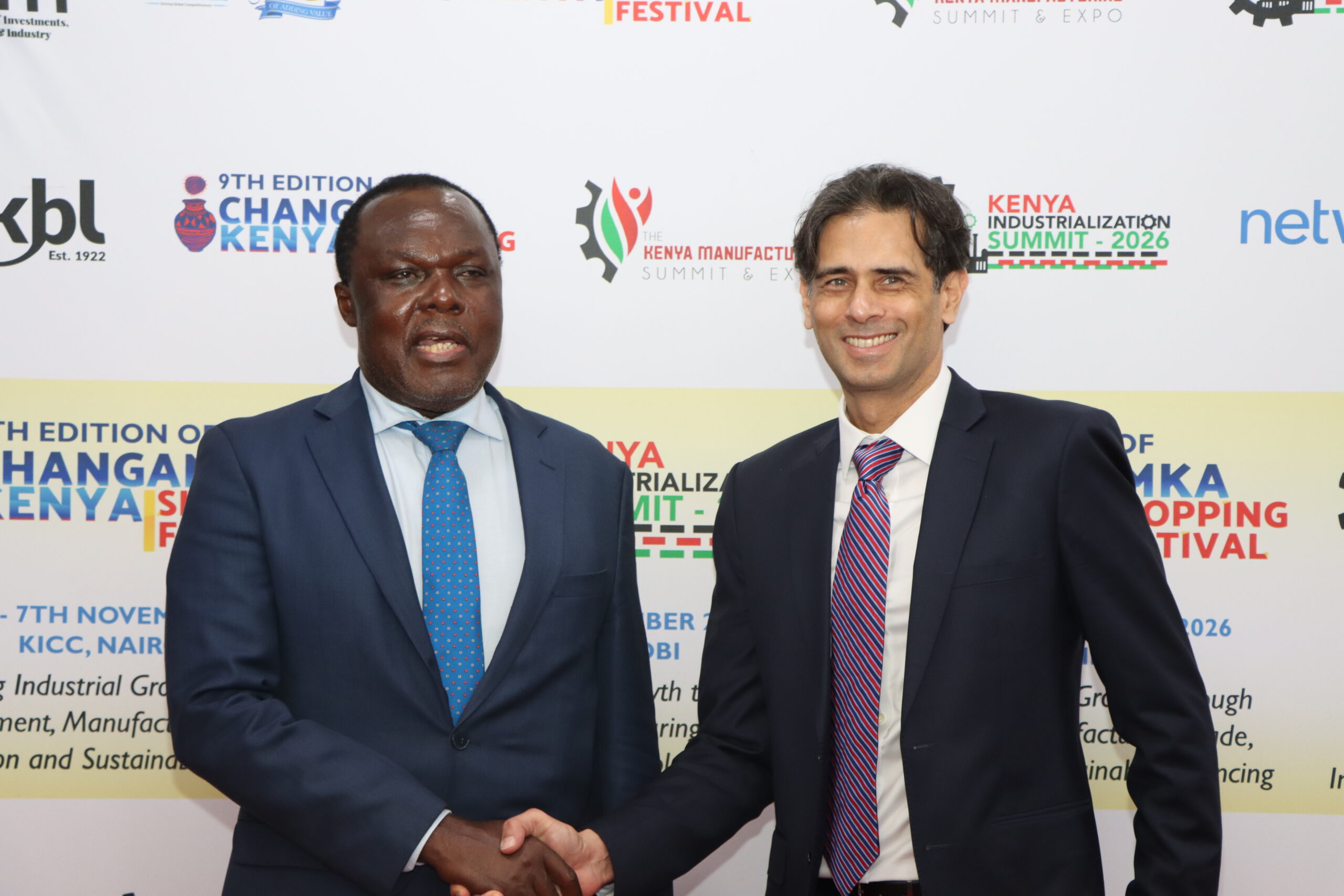
The announcement was made during a joint media briefing by KAM and the Ministry of Investments, Trade and Industry (MITI) on Wednesday, 14th October 2026.
Speaking during the media briefing, Principal Secretary, State Department for Industry Dr Juma Mukhwana highlighted the role of manufacturing in driving Kenya’s economic transformation, noting that the country needs to move from primary production to secondary production through value addition.
“The time has come now for us to really use these raw materials to build the industries of the future. We want to have a Kenya where we are manufacturing 50% of all the items that we need. Kenya’s manufacturing sector contributes approximately 8% to GDP and employs nearly 500,000 people. Strengthening local production would create employment opportunities, reduce dependence on imports and enable the country to take advantage of regional markets, including those available through the African Continental Free Trade Area (AfCFTA) and East African Community (EAC)”
Dr Mukhwana also added that increasing local production would help reduce dependence on imported goods while creating jobs and strengthening the country’s industrial base, noting, “Kenya should work towards manufacturing a greater proportion of the goods it consumes, retaining employment opportunities that would otherwise be created in other markets. This shift presents opportunities across the value chain, from farmers supplying raw materials to processors, manufacturers, transporters and distributors. By investing in local processing and production, Kenyan businesses can move beyond supplying raw materials to producing finished goods for consumers at home and across regional markets.”
KAM Board Chairperson Hitesh Mediratta highlighted the need for Kenyan manufacturers to strengthen their position in the domestic market while expanding their reach into regional and international markets.
“A strong domestic market provides an important foundation for industrial growth. However, our ambitions must extend beyond domestic consumption. Kenya must increasingly embrace export-led industrialization, enabling manufacturers to achieve economies of scale, diversify their customer base, earn foreign exchange and create more productive employment,” said Mr Mediratta.
Mr Mediratta noted that opportunities under trade agreements such as the African Continental Free Trade Area (AfCFTA), the Kenya-European Union Economic Partnership Agreement (Kenya-EU EPA), the African Growth and Opportunity Act (AGOA) and the Common Market for Eastern and Southern Africa (COMESA) provide avenues for Kenyan manufacturers to reach wider markets.
However, taking advantage of these opportunities will require sufficient production capacity, affordable financing, reliable infrastructure and the ability to meet the standards and requirements of target markets.
He noted that Changamka provides an opportunity to bring locally manufactured products closer to consumers, build confidence in Kenyan brands and strengthen the connection between purchasing decisions and the growth of local industry. By supporting competitive Kenyan-made products, consumers contribute to sustaining businesses, strengthening supply chains and creating employment across the economy.
The Summit and Expo, co-hosted by KAM and the Ministry of Investments, Trade and Industry (MITI), will bring together Government, manufacturers, investors, financial institutions and development partners to discuss investment, innovation, market access and the competitiveness of Kenyan industry.
The events are supported by partners including the United Nations Industrial Development Organization (UNIDO), Network International, Mitchell Cotts and Kenya Breweries Limited.
KAM is calling on consumers, manufacturers, buyers, distributors and investors to participate in Changamka Shopping Festival 2026, explore locally manufactured products and establish business connections that can support the growth of Kenyan industry. As the Festival returns for its ninth edition, it offers an opportunity to celebrate what Kenyan manufacturers produce while strengthening the connection between local products, consumer choice, job creation and the growth of businesses across the country.