The Government has outlined major milestones across key sectors including education, healthcare, housing and employment, pointing to sustained reforms aimed at improving service delivery and economic opportunities for Kenyans.
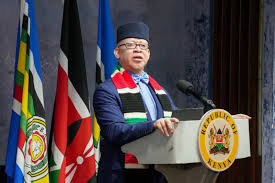
Speaking during a weekly press briefing at the Harambee Annex Media Centre, Government Spokesman Isaac Mwaura detailed progress made under ongoing policy interventions, with a strong emphasis on education funding, Universal Health Coverage and job creation.
Mwaura announced that the State has released substantial capitation funds to public schools to ease financial pressure on parents and enhance learning conditions.
“The Government has made significant strides in the education sector by releasing Sh.23.4 billion in capitation funds to support learners in public schools, easing the financial burden on families and ensuring access to learning materials and co-curricular activities.”
He added that accountability systems are being strengthened to eliminate inefficiencies in the sector.
“With structured disbursement and accountability systems such as the National Education Management Information System (NEMIS), the Government is enhancing transparency, eliminating ghost students and ensuring equitable allocation of resources across institutions.”
On staffing and infrastructure, the spokesman said the Government is nearing its teacher recruitment targets while expanding school facilities.
“The government has hired 100,000 teachers out of the promised 116,000 and constructed over 23,000 classrooms nationwide.”
He further noted that broader reforms are underway to improve the quality of education.
“Ongoing reforms include curriculum improvements, teacher training, expansion of technical education and plans to build 1,600 laboratories, all aimed at improving the quality and relevance of education.”
Mwaura said reforms in university financing are making higher education more accessible through a mix of scholarships and loans.
“The revised higher education funding model has made university education more accessible and affordable through a combination of scholarships and loans, with funding rising to Sh 53.1 billion.”
He added that the Government is tackling accommodation shortages.
“The Government is also addressing student accommodation challenges by planning the construction of 178,000 student beds under the Affordable Housing Programme, while strengthening support for vulnerable learners through the Higher Education Loans Board (HELB).”
The briefing also highlighted significant growth in healthcare access under the new Social Health Authority.
“The Universal Health Coverage has expanded significantly from under 8 million under the defunct NHIF to 30.8 million Kenyans through the Social Health Authority (SHA).”
Mwaura said reforms are improving benefits and reducing costs for citizens.
“Reforms have improved healthcare access for teachers by eliminating co-payments, expanding benefits to include specialized treatment abroad and introducing services such as In-Vitro Fertilization (IVF), while also clearing pending claims and strengthening service delivery oversight.”
On housing, the Government reported continued progress in construction and job creation.
“The Affordable Housing Programme continues to drive economic transformation, with over 273,000 houses under construction, 9,000 already allocated and more than 640,000 jobs created.”
“The programme promotes inclusivity by prioritizing women (30%) and persons with disabilities (5%), while also empowering local communities (60%) and artisans through job creation and certification under the Recognition of Prior Learning initiative.”
Mwaura further highlighted progress in labour export programmes aimed at expanding employment opportunities for Kenyans abroad.
“The Government has advanced the overseas employment programme by creating structured and dignified opportunities for Kenyans abroad through bilateral agreements and targeted initiatives such as Mkulima Majuu and Mhandisi Majuu.”
“These efforts have enabled over 580,000 Kenyans to secure jobs internationally under protected and regulated frameworks.”
On diaspora support, he pointed to cost-saving measures and strengthened partnerships.
“Enhanced diaspora engagement has been achieved through fiscal reforms that reduce embassy operational costs by Ksh.3 billion annually and through strengthened labour mobility agreements with countries like Canada.”
“These measures are expanding opportunities for Kenyans abroad while promoting efficiency, accountability and stronger international partnerships.”
The Government maintains that the reforms across sectors are part of a broader strategy to deliver inclusive growth, improve livelihoods and strengthen institutional accountability.