
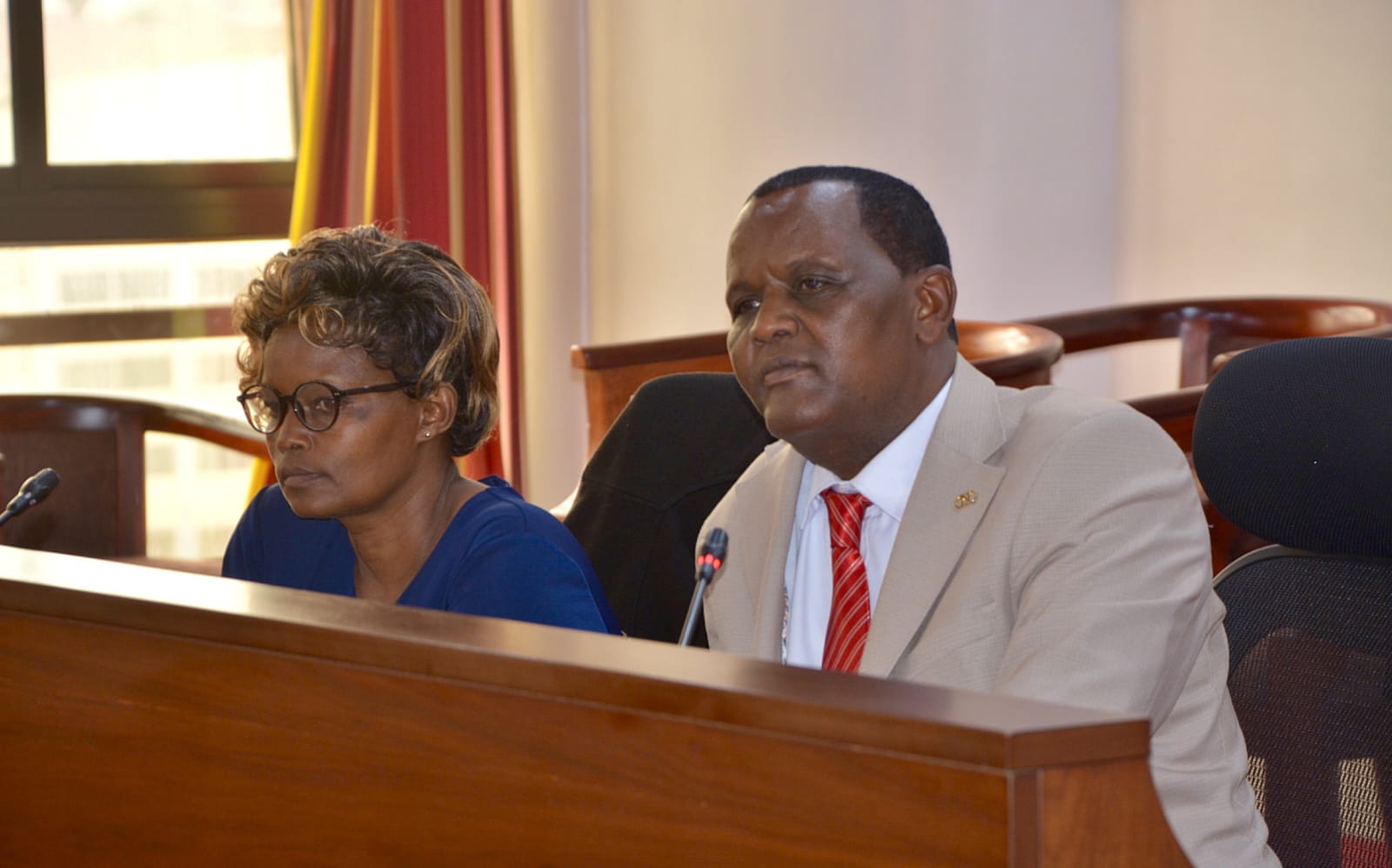
St. John’s Teachers Training College Kilimambogo is on the spot following a damning audit report highlighting widespread financial and administrative irregularities before the Dick Maungu (Luanda) led-National Assembly Public Investment Committee on governance and education for the financial year ending June 30, 2025.
The report by the Auditor General raised concerns over weak internal controls, unsupported expenditures, procurement breaches, and non-compliance with key public finance laws, painting a picture of systemic governance challenges at the institution.
The auditors flagged Sh. 7.8 million in receivables, with a significant portion remaining uncollected for years.
‘’Included in this balance is Kshs. 3,746,382 which has been outstanding for more than three (3) year while Sh. 3,842,374 is owed by old students who have already graduated.” The report noted.
Management defended itself, stating“The students with fees arrears did not take part in the graduation ceremony as graduation is pegged on clearing of fees. The college has withheld their Certificates until they clear the outstanding fees.”
However, auditors noted gaps in evidence to support these claims.
The institution also failed to substantiate its inventory holdings of Sh. 4.17 million, with the report stating, “there was no evidence provided in regard of quarterly and annual stock taking carried out within the year under review.”
Management admitted the lapse,“The college has instituted measures to ensure regular stock taking and documentation required.” Despite this, the issue remains unresolved.
Further concerns were raised over land ownership where the college sits on approximately 120 acres but lacks a title deed where the management acknowledged the situation, explaining,“The college is in communication with the sponsoring authority to formalize ownership arrangements and documentation confirming the land occupancy.
The audit uncovered multiple procurement irregularities, including unsupported purchases and deviations from procurement laws. In one instance involving the acquisition of an ERP system, management admitted shortcomings.
“The management recognizes that the procurement process did not fully comply with the provisions of the Public Procurement and Asset Disposal Act (PPDA) 2015.”
They attributed this to urgency and capacity constraints, adding the decision was made “to ensure prudent resource management and phased system implementation.”
However, auditors noted lack of documentation, missing approvals, and unexplained contract variations.
Revenue streams were also questioned,“the invoices and contracts were not provided for audit hence the terms and conditions for hire of the facility as well as payment terms could not be confirmed.”
Although management claimed,“The management has provided the invoices and contracts for hire of Facilities,”auditors found the evidence incomplete.
The institution was also cited for failing to meet statutory and governance requirements, including ethnic diversity and reporting obligations.
On staffing imbalances management said,“The Management is committed to complying to the Provision of National Cohesion and Integration Act, 2008 in its future B.O.M employees’ engagements.”
Similarly, on failure to submit governance reports they admitted,“The management regrets having breached the Law.”
Auditors further flagged poor financial management practices, including unreconciled cash books and misuse of imprest funds the report noted that,“cash books were not reconciled on a regular basis; daily, weekly or monthly as required by standard financial procedures.”
Management responded, “The monthly bank reconciliation has been prepared promptly. The management has put measures in place for the review of the cash and bank balances on a monthly basis.”
Out of 27 audit queries raised, only four were fully addressed, with 18 remaining unresolved and five partially addressed.
The audit now sets the stage for further scrutiny by oversight bodies, as pressure mounts on the college management to implement corrective measures and restore financial discipline.