Murang’a Teachers Training College has formally responded to audit queries raised by the Office of the Auditor-General (OAG) before the National Assembly Public investment committee on education and governance for the financial year ending June 30, 2025, outlining corrective measures and progress made to address key concerns before the lawmakers.
The OAG has flagged issues such as the failure to conduct proper valuation of land and biological assets where the the audit indicated that land valued at Sh.300 million and biological assets worth Sh.962,000 lacked supporting valuation reports, raising concerns about accuracy.
The audit report stated, ‘’The value of the land is not supported by a valuation report and in the circumstances, the accuracy and completeness of the value of land estimated at Sh.300,000,000 and biological assets amounting to Sh.962, 000 could not be confirmed.”
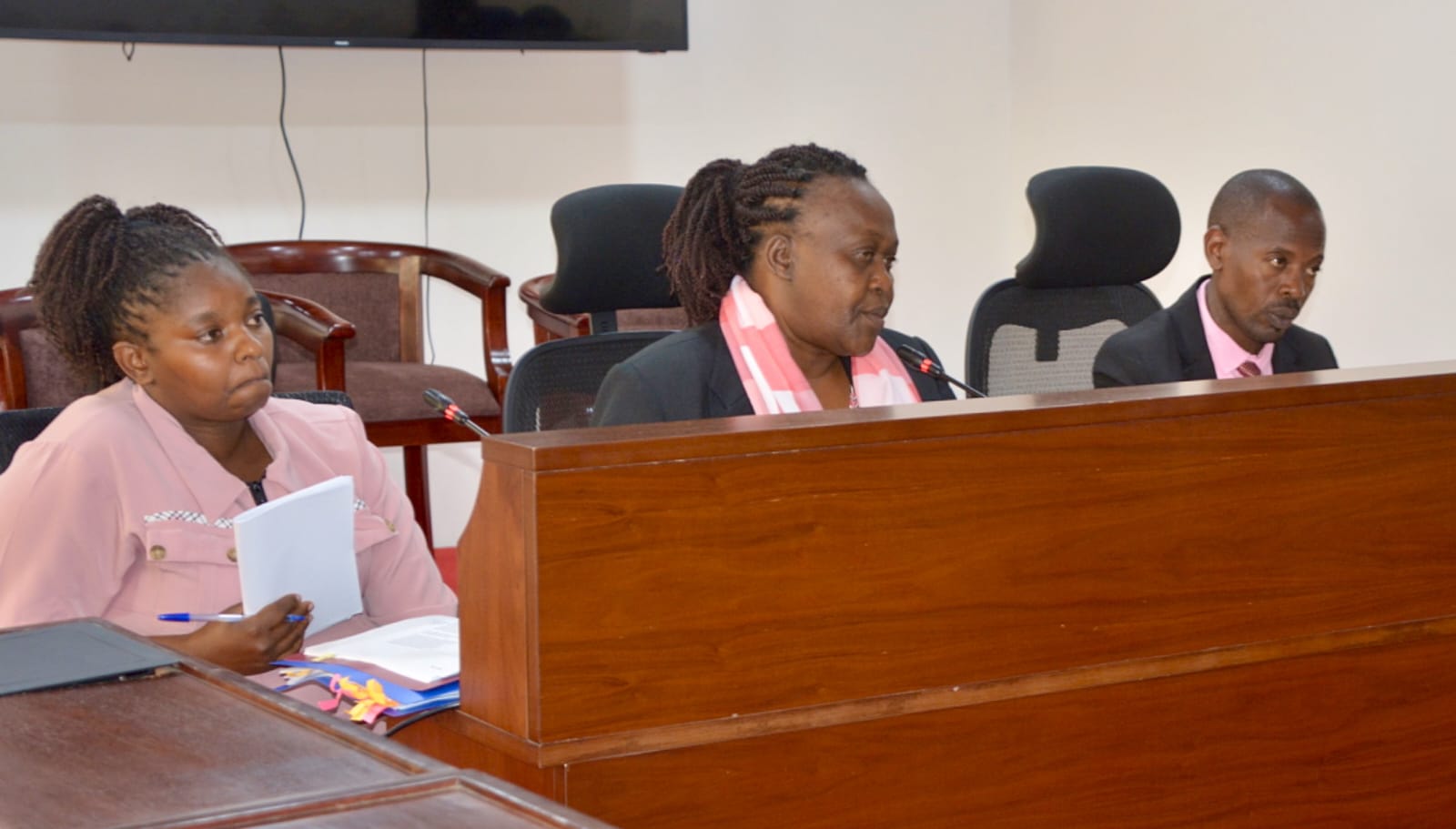
In response, the college principal Purity Ngure attributed the delay to land subdivision processes involving a primary school hosted on its land and confirmed that valuation efforts are underway.
“Currently the Management started the process and has sent and received communication from the government valuer.” Ngure told the lawmakers.
Additionally, management disclosed that it had formally requested valuation services from the County Land Valuation Office.
The audit also flagged discrepancies in budget performance, noting overfunding and under-utilisation of resources where the institution recorded an under-absorption of Sh.37.6 million, representing 27 percent of actual receipts.
The report observed,“The under absorption may have affected the planning activities for the year and may have impacted negatively on service delivery to the public.”
In its response, the chief principal linked the under-utilisation to delays in infrastructure projects.
“The under-utilised amount of Sh.37,654,213 was meant to complete 12 classrooms and dining hall which have been delayed due to technical reasons.”
Ngure told the MPs that she has taken note of the issue and pledged improved budget execution going forward.
According to the report on the Lawfulness and Effectiveness in the Use of Public Resources, the institution was found to have made payments that were not anchored in law, casting doubt on the integrity of its expenditure.
A key concern raised in the audit is the approval and payment of increased allowances to members of the Board of Management (BoM) without legal backing.
The OAG report states,“Review of the Board of Management (BoM) minutes of the full board dated 09 December, 2022 under Min. BOM. 08/12/2022 on compensation for travel to attend BoM Meetings concluded with Members approving the review of allowances upwards so that Members of the Board be paid allowances from Sh.7,000 to Sh.9,000 while the Chair of the Board from Sh.9,000 to Sh.11,000.”
However, the Auditor-General found these payments lacked a legal basis.
“The allowances were paid based on the recommendations of the Committees, however, the rates were not supported by any lawand in the circumstances, regularity and value for money on the payments made could not be confirmed.”
The audit also pointed to non-compliance with International Public Sector Accounting Standards (IPSAS), particularly in the disclosure of biological assets.
“Management did not disclose the methods and significant assumptions applied in determining the fair value of each group of biological assets as required under Paragraphs 38 to 51 of the International Public Sector Accounting Standards (IPSAS).” OAG noted.
This omission raised concerns among the lawmakers tasking the principal to explain where they said that the issue raisestransparency and adherence concerns to internationally accepted financial reporting standards.
However, a deeper review revealed irregularities, “Review of payrolls and payment vouchers revealed that the College engaged six (6) temporary teaching staff whose remuneration amount of Sh.2,234,000 was processed outside the payroll system.”
The payments were made in violation of statutory requirements, “The payments were paid as gross amounts without deducting statutory deductions such as PAYE, NSSF, SHIF and Housing Levy contrary to the existing laws on deductions and remittances of statutory deductions.”
The submission now awaits parliamentary review as part of broader oversight on public institutions’ financial management practices.