Members of the National Assembly Public Investments Committee on Commercial Affairs and Energy have called on the National Irrigation Authority (NIA) to expedite the completion of key irrigation and water projects, even as an audit review pointed to a mix of progress, delays, and internal operational challenges within the agency.
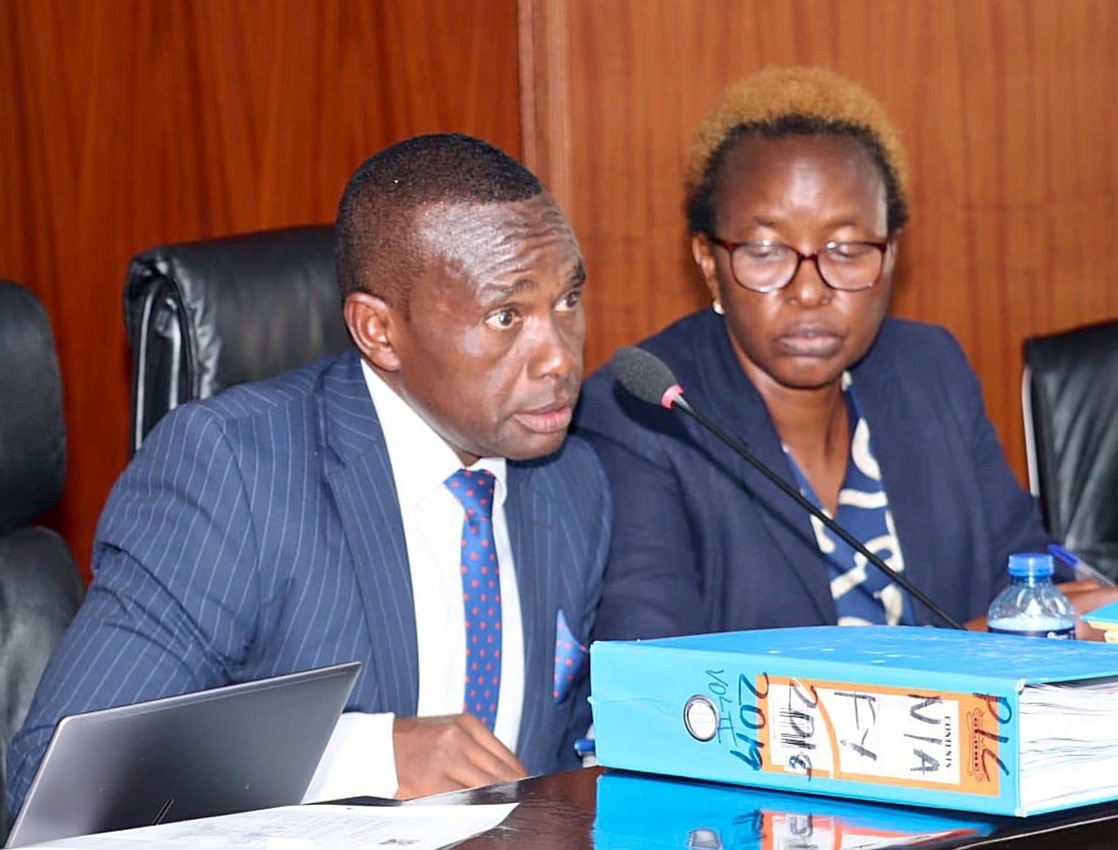
The Pokot South MP,David Pkosing led Committee reviewed queries raised by the Auditor General covering Financial Years 2018/2019 to 2024/2025 where the lawmakers acknowledged the scale and importance of NIA’s work in expanding irrigation infrastructure, but expressed concern that delays in several projects are slowing the realization of intended benefits to communities.
Among the projects cited were the Water for Household Project Phase II in Mwatate, Kerwa Dam rehabilitation in Mbeere South, Kathanje Earth Dam in Tharaka Nithi, and the Iganjo/Silanga Water Pan in Murang’a. Larger schemes such as the Bura Irrigation and Settlement Scheme and the Lower Nzoia Irrigation Scheme, as well as the Thiba Dam in Kirinyaga, were also highlighted during the session.
MPs heard that the delays have been caused by a combination of factors, including payment challenges, land ownership disputes, and administrative processes such as the handover of completed projects to county governments. At the same time, the discussions indicated that some projects are in advanced stages and require coordination with counties to transition into full operation.
Pkosing emphasized the need for closer collaboration between the Authority and county governments to ensure sustainability of the projects once completed.
“Ensure you have a discussion with the host counties, especially for projects whose routine maintaince is under the relevant county Governments. That is the only way Kenyans can get value for money,” noted Pkosing.
The Committee noted that while delays have affected access to water and irrigation services in some areas, completion and proper management of the projects would significantly boost agricultural productivity and create employment opportunities.
In addition to project implementation, the audit review also examined internal systems within the Authority. The Auditor General flagged the non-use of an Audit Management System despite substantial payments having already been made.
“The Audit Management System was procured at a contract sum of Sh. 6,499,736. To date, a total payment of Sh. 5,531,461.36 has been made to the firm.However, it was observed that the system was not being used by the internal auditors,” noted the Auditor General.
Lawmakers raised concern over the issue, while also noting that addressing such gaps could strengthen internal oversight and improve efficiency within the Authority.
Further, the Committee pointed to the need for improved asset management, citing missing ownership documents and valuation records for some property, plant, and equipment. MPs indicated that resolving these issues would enhance accountability and support better planning.
To address the concerns, the Committee recommended that NIA’s legal team work with relevant government agencies to formalize ownership and transfer arrangements, particularly for projects nearing completion.
The engagement reflected Parliament’s broader oversight role balancing scrutiny of public spending with recognition of ongoing efforts to expand irrigation infrastructure while underscoring the importance of timely delivery, proper management, and accountability in ensuring long-term benefits to Kenyans.