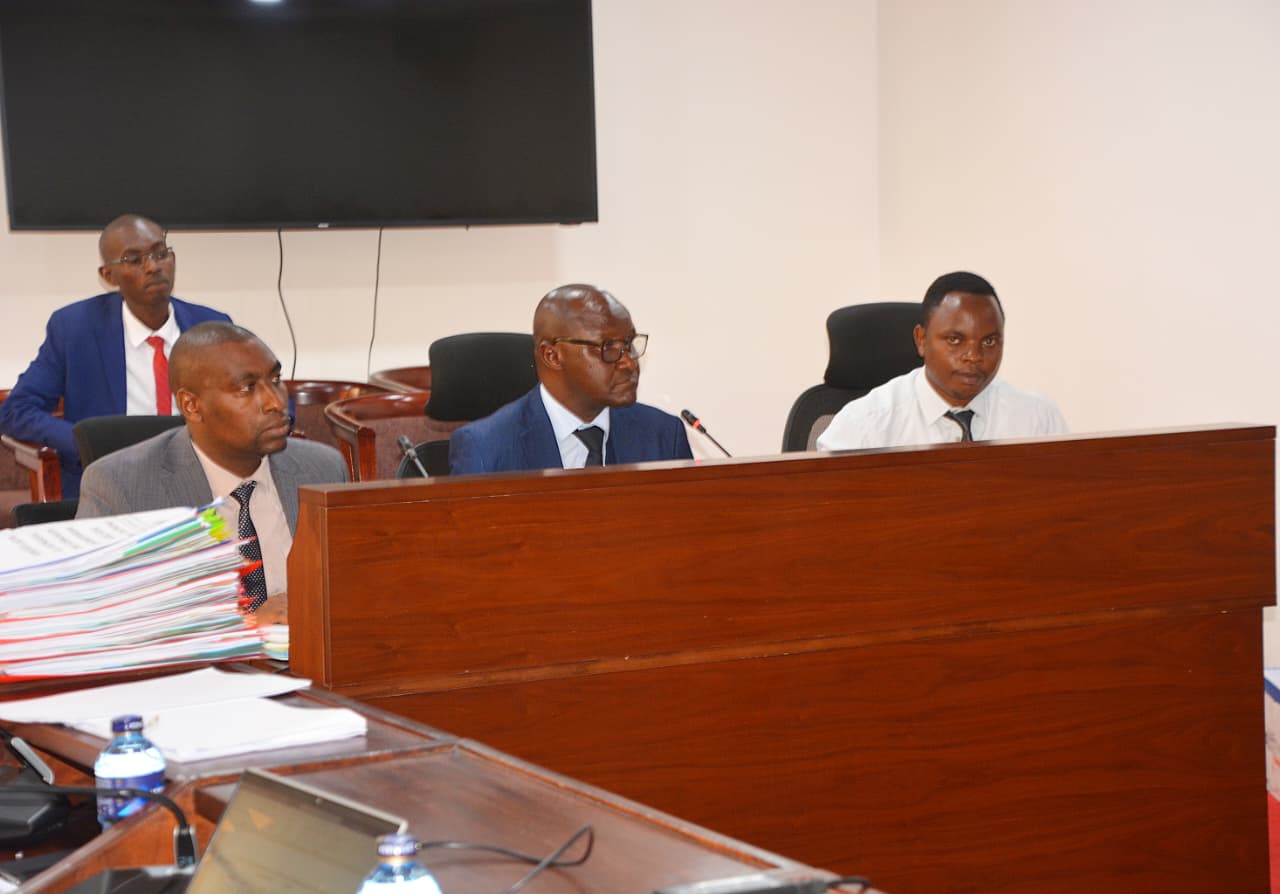
Office of the Auditor-General has flagged Kitui Teachers Training College over procurement irregularities and non-compliance with laws on ethnic composition, raising concerns about governance and adherence to public finance regulations.
According to the Auditor-General’s report before the National Assembly Public Investment committee on Education and Governance for the financial year ending June 30, 2023, the college made cash purchases amounting to Sh. 5.9 million in a manner that breached low-value procurement procedures outlined in the Public Procurement and Asset Disposal Regulations, 2020.
The report states, “The financial statements reflects use of goods and services amount of Sh. 15,691,282 out of which cash purchases amounted to Sh. 5,948,284. However, these purchases surpassed the threshold of Sh. 50,000 per component per financial year for low value procurement as prescribed in the second schedule of the Public Procurement and Asset Disposal Regulations,2020.”
Auditors further noted that the procurement process lacked critical supporting documentation and approvals.
The report added,“Further, there was no recommendation by the head of the procurement function prescribing low-value procurement and market survey was not conducted and approved by the accounting officer to inform low-value procurements.”
The Auditor-General also questioned the authenticity and accountability of the transactions, noting that some purchases lacked tax documentation and proof of delivery.
“In addition, these purchases were not supported by the original Kenya Revenue Authority Electronic Tax Receipt (KRA ETR Receipt) and there was no evidence that the goods were received in the stores and in the circumstances, management was in breach of the law.” The report added.
In its response, the college principal Gerald Mutegi admitted the shortcomings and pledged corrective action.
“Management acknowledges the observation regarding non-compliance with low-value procurement procedures in respect of cash purchases amounting to Sh. 5,948,284 under use of goods and services.” Mutegi said.
The institution further said it had initiated reforms to strengthen procurement controls.
According to the response,“Management has undertaken a comprehensive market survey to guide procurement decisions. In addition, controls have been strengthened to ensure that all future procurements comply with the prescribed thresholds and procedures.”
Management added,“Procurement will strictly be conducted through prequalified suppliers who provide valid Kenya Revenue Authority Electronic Tax Receipts (ETR), and all transactions will be supported by appropriate documentation, including evidence of receipt of goods through the stores records.”
The committee vice chairperson, Boyd Were, questioned the payment of allowances without proper authorization, asking, “Why did you pay the allowances without the approvals?”
MP Chiforomondo Munga (Lunga Lunga) faulted the management for attempting to justify the irregularities by comparing themselves to other institutions, saying, “When you go to court you don’t say others stole. Just address the issue as it is and do not lean to other schools.” He further expressed dissatisfaction with the responses from the institution’s leadership, stating, “You’re not addressing the issues Mr Principal.”
MP Rebecca Tonkei (Narok) also sought accountability over the matter, asking, “Who was responsible then? What happened?”
In response, the management explained, “Sometimes there is activities we get know people who can supply the services.”
However, lawmakers maintained that the financial irregularities were serious and required firm action. MP Chiforomondo warned, “What you’re telling us it tells volume and we have problem. 5.9M is not a small money. There is a calendar and we shall pronounce ourselves and they should refund back the money.”
MP Joseph Tonui (Kuresoi South), speaking in agreement with Boyd Were, added, “That is a huge sums of money and we must pronounce ourselves and we must act.”
The committee’s interim chairperson, Dick Maungu, also cautioned the management over the findings, saying, “The law is punitive and we shall get to know what happened and we shall go to get more inquiry.”
On ethnic diversity, the institution was also found to be non-compliant with legal requirements on inclusivity in public service hiring. The school management acknowledged the imbalance, stating, “Moving forward we are going to correct the imbalance to get the standards required.”
Auditors established that the institution had disproportionately recruited staff from a single ethnic community.
The audit report states, “Review of the staff bio data revealed that College had forty-six (46) staff members out of whom thirty-nine or 85 percent belonged to the dominant ethnic group in the county.”
The Auditor-General noted that the staffing composition violated legal provisions requiring public institutions to uphold diversity and inclusivity.
Addressing the issue further, Maungu asked, “How many people do you have those who are PWDs? Do you have any staff who is a disability case?”
The Principal admitted that the institution currently had no staff living with disabilities, explaining, “We do not have any in the institute like recently we advertised a vacancy for a nurse and none applied.”
In response, MP Dick Maungu (Luanda) urged the institution to take deliberate measures to address the gap, saying, “Mr Principal you must be intentional and you must comply. Diversity across should be fair and I hope you’re guided.”